
Internal Bleeding After a Car Wreck: What Affects a Settlement

In Texas, a settlement for internal bleeding after a car wreck depends on the injury’s severity, the treatment required, and its effects on your work and daily life. Medical expenses, lost income, future earning capacity, and evidence linking the injury to the crash all shape a claim. Suspected internal bleeding requires immediate emergency care because it can become life-threatening.
It’s understandable to focus on visible injuries after a collision, but internal bleeding may not be obvious at first. Symptoms can emerge hours or days later, and serious complications may include organ damage, emergency surgery, or lasting health problems.
This article explains what internal bleeding can involve, which symptoms and complications need attention, and how Texas claims may account for treatment costs, time away from work, and reduced future earning capacity.
Table of Contents
What Is Internal Bleeding from a Car Accident?
Internal bleeding occurs when blood escapes from damaged vessels or organs inside the body after a crash. The injury may not show on the skin, so visible bruises or cuts don’t reveal its full extent.
Hidden Organ and Brain Injuries
Hidden organ and brain injuries are internal damage that may not be apparent immediately after a collision. A broken rib can puncture an organ, while blunt force can tear the liver, spleen, or kidneys. A traumatic brain injury may involve bleeding inside or around the brain. The injury’s location and severity matter because they affect treatment and recovery.
For example, seat-belt pressure during a collision may injure the abdomen without leaving an open wound. A forceful head impact can cause bleeding around the brain, while a blow to the chest may damage a lung or blood vessel. Children may be more vulnerable because their organs are more compact and have less protection from muscle and bone. A physician can assess and diagnose internal organ damage.
Internal injuries can result from blunt-force or penetrating trauma, deceleration, fractures, or compression. Blunt force may tear blood vessels or damage the liver, spleen, or kidneys. Broken ribs can puncture organs, while severe chest trauma may collapse a lung. A penetrating object can directly injure tissue or blood vessels. The crash mechanics can help explain how a collision caused a particular injury.
Crash-Related Internal Injury Types
Crash-related internal injuries include organ lacerations, bleeding around the brain, damaged major blood vessels, and gastrointestinal perforations. They may result from a direct impact, penetrating injury, or sudden deceleration. Identifying the specific injury matters because a ruptured spleen raises different medical concerns than bleeding associated with a traumatic brain injury.
Other examples include a ruptured liver or kidney, an organ punctured by broken ribs, and a collapsed lung. Compression can injure abdominal organs, while a sudden stop can stretch or tear blood vessels. The injury depends on the forces involved and the area of the body struck, not simply on how damaged the vehicle looks. A physician’s diagnosis helps distinguish internal injuries from external trauma.
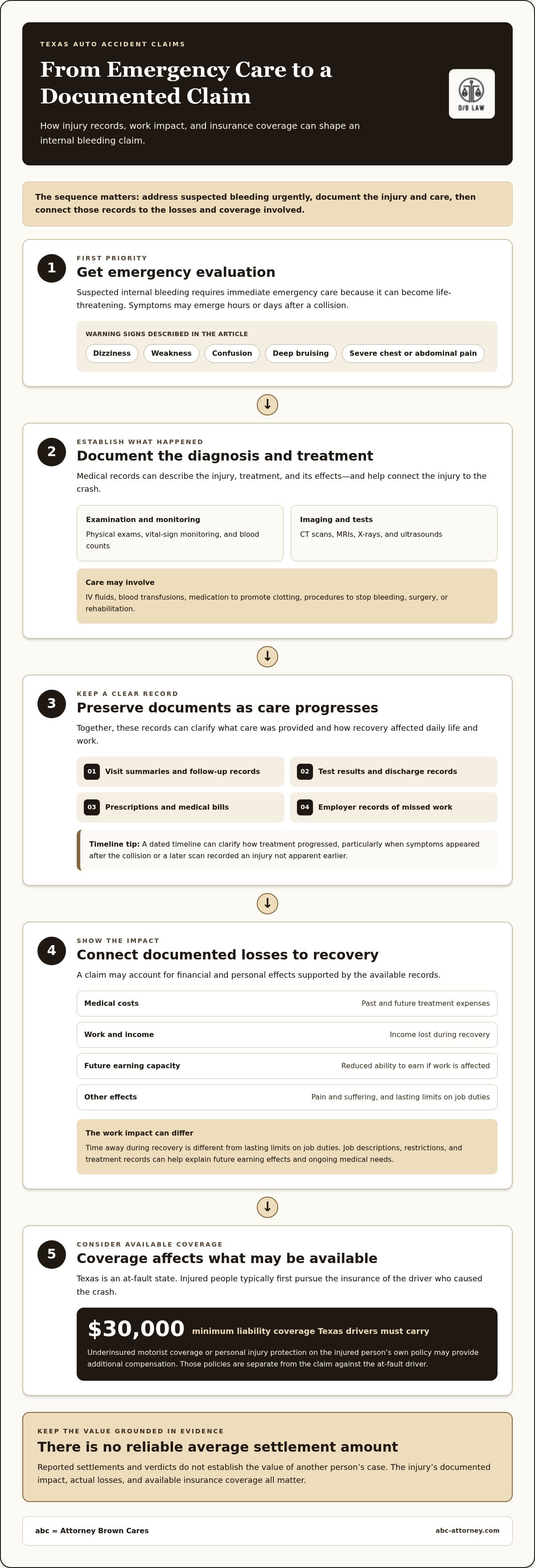
Texas insurance coverage can also affect how an injured person pursues compensation. Texas drivers must carry at least $30,000 in liability coverage, and Texas is an at-fault state, so injured people typically first pursue the insurance of the driver who caused the crash. Underinsured motorist coverage or personal injury protection on the injured person’s own policy may provide additional compensation. These policies are separate from the claim against the at-fault driver.
Compensation for medical costs and lost earning potential
Compensation may account for treatment expenses, income lost during recovery, and reduced future earning capacity. A settlement for internal bleeding after a car wreck depends on documented losses, the injury’s effects, and available insurance coverage.
Medical Expenses and Rehabilitation
Compensation for medical expenses addresses injury-related care, while rehabilitation can support recovery and function. Both may matter when treatment continues after emergency care.
Treatment for internal bleeding may involve IV fluids, blood transfusions, medication to promote clotting, procedures to stop the bleeding, or surgery. Rehabilitation may also be needed after a serious injury. Keep visit summaries, prescriptions, bills, and follow-up records together. These documents help show the care provided and how the injury affected recovery.
Documenting Injuries for a Claim
Medical records document the diagnosis, treatment, and effects of internal bleeding. They can help link the injury to the crash and support the losses claimed.
Doctors may use physical exams, vital-sign monitoring, blood counts, CT scans, MRIs, X-rays, or ultrasounds. Keep test results and discharge records, as well as employer records showing missed work. A dated timeline can clarify how treatment progressed, especially if symptoms appeared after the collision. For example, a later scan may record an injury that wasn’t apparent during an earlier examination.
Settlement Amount Considerations
There is no reliable average settlement amount that determines what an individual internal bleeding claim is worth. Reported settlements and verdicts don’t establish the value of someone else’s case.
For a settlement involving internal bleeding after a car wreck, relevant losses can include past and future medical bills, lost wages, pain and suffering, and reduced earning capacity. The effect on work matters: time away during recovery differs from lasting limits on job duties. Insurance coverage also affects available compensation. A well-documented claim should show the injury’s actual impact rather than rely on an unrelated case outcome.
Future losses need careful documentation. If someone can’t return to the same work, records describing job duties and restrictions can help explain the effect on earning capacity. Treatment records can also show ongoing medical needs. Evaluate a settlement for internal bleeding after a car wreck against these documented financial and personal effects, not a generic estimate.
Emergency evaluation takes priority when internal bleeding is suspected. Afterward, preserve treatment records and evidence of missed work so the claim reflects the full impact. To discuss how those records relate to your Texas accident claim, contact the legal team about your accident.
Symptoms of internal bleeding
Internal bleeding symptoms depend on where blood collects and how the injury affects the body. Some warning signs appear quickly; others emerge hours or days after a crash.
Symptoms by Bleeding Location
Symptoms can differ with bleeding in the brain, chest, abdomen, or soft tissue. Recognizing the pattern matters because a serious internal injury may have no visible wound.
Bleeding in or around the brain may cause severe headaches, confusion, seizures, nausea or vomiting, coordination problems, vision changes, or drowsiness. Chest or abdominal bleeding may cause difficulty breathing, coughing up blood, bloody vomit, or severe pain. Blood in stool or urine can also signal an internal injury. Bleeding around muscles, tendons, or ligaments may cause swelling, cramping, joint stiffness, severe pain, or bruising and discoloration.
Delayed Symptoms After a Crash
Delayed symptoms are warning signs that develop after the collision rather than immediately at the scene. Their timing matters because being able to leave the accident site doesn’t rule out internal injuries.
Symptoms may take hours or days to appear, and some signs of internal injury may not emerge until one or two weeks later. Anyone who develops new abdominal pain or deep bruising days after a crash should still seek medical care. Tell the doctor when symptoms began and how they changed so the assessment takes the crash and the full timeline into account.
Watch for signs of shock, too. Cool, clammy, or pale skin, a weak or rapid pulse, lethargy, confusion, agitation, thirst, dry mouth, or bluish lips or fingernails can indicate a serious condition. Shock after a car accident requires immediate medical care. Don’t wait for every symptom to appear before acting.
Some signs are easy to mistake for ordinary soreness after a collision. A worsening headache with confusion, for example, differs from isolated tenderness and may indicate a brain injury. Severe chest pain with difficulty breathing also demands urgent evaluation. The combination and progression of symptoms can help a doctor assess the risk, but only a medical evaluation can identify the cause.
Keep a clear timeline: note when pain, dizziness, weakness, vomiting, or bruising first appeared and whether each symptom worsened. Share that account with the doctor, including any changes in alertness or vision. If you suffered internal injuries, these details may also help an attorney understand how the condition developed after the crash. Seek emergency care immediately for signs of shock, severe pain, breathing difficulty, or confusion.
Complications from internal bleeding
Internal bleeding can become serious when blood loss reduces the oxygen reaching vital organs. Without treatment, this can lead to shock, organ failure, or death. A person may also suffer permanent organ damage or paralysis. The danger depends on where the bleeding occurs, which structures it injures, and whether it continues. A small visible bruise cannot show how much damage lies beneath the skin.
Complications differ by injury location. Bleeding around the brain may increase pressure and damage brain tissue. A traumatic brain injury involving bleeding may require a craniotomy to stop the bleeding and relieve pressure from fluid buildup. Bleeding in or around muscles can create pressure that restricts blood flow to a limb. A fasciotomy may relieve that pressure and help protect the injured limb from further harm.
Ongoing or severe bleeding may require surgery to repair damaged organs or tissues and control the source. For example, abdominal bleeding can involve a ruptured organ or perforated blood vessel. Chest bleeding may require a procedure to locate the source and drain fluid. The operation, recovery, and follow-up care can extend beyond the emergency visit. Treatment records can show which complications occurred and what care they required.
A missed diagnosis can worsen the harm. If internal bleeding goes untreated, a patient may later need emergency surgery, face a longer hospital stay, or develop permanent organ damage and lasting health problems. For example, someone discharged before an internal injury is recognized may return when the condition has worsened. A delay can affect both the medical course and time away from work.
Some effects continue after the bleeding stops. Internal injuries to reproductive organs can lead to fertility issues later. Organ damage may also require continued medical care or limit daily activities. These consequences matter when assessing losses, including treatment expenses, missed wages, and reduced earning capacity. An attorney reviewing a claim may need records linking each complication to the crash and describing its effects, not just the initial diagnosis.
The practical takeaway is to track each complication from diagnosis through recovery. Keep records of surgeries, hospital stays, follow-up care, and work absences. If a new condition appears after treatment, tell the doctor and note when it began. A clear medical timeline helps explain how blood loss caused further injury, why additional care was needed, and how lasting effects changed the injured person’s health and ability to work.
How do doctors document internal bleeding injuries for an auto accident claim?
Doctors document suspected internal bleeding through examination findings, vital signs, imaging, blood tests, diagnoses, and treatment records. These records help explain what injury was found, when it was assessed, and what care followed the Texas crash. Together, those details can link the collision to the medical condition and show what treatment it required.
The initial assessment may include a physical exam and repeated vital-sign monitoring. A doctor may track changes in pulse or blood pressure while evaluating pain, tenderness, bruising, and other signs. A single observation captures only one moment. Follow-up notes can show whether the patient’s condition improved, remained stable, or required more urgent intervention.
Imaging helps identify injuries that an external examination cannot show. Doctors may use CT scans, MRIs, ultrasounds, or X-rays. X-rays show bone structure, while CT scans, MRIs, and ultrasounds can help detect internal injuries, including bleeding. For example, imaging can help identify internal injury after a crash even when the skin has no visible wound.
Physical examination: records pain, tenderness, bruising, and findings in the affected area.
Vital-sign monitoring: tracks changes during evaluation and treatment.
Imaging and blood counts: help identify internal injuries and assess the patient’s condition.
Blood counts provide another part of the clinical record. A physician may consider them alongside symptoms, vital signs, and imaging rather than treating a single result as the whole picture. For instance, abdominal pain after a collision may prompt imaging and continued monitoring. The reports can document the medical basis for treatment and clarify which injuries doctors identified.
For a claim, organize records by date: emergency evaluation, diagnostic results, admission or discharge, procedures, prescriptions, and follow-up care. Keep copies of visit summaries and bills. If symptoms appeared later, note when they began and tell the doctor during the appointment. A dated timeline can help explain why an assessment took place after the crash rather than at the scene.
Accuracy matters. Tell the doctor about the collision, where your body was struck, and when each symptom started. If pain worsens between visits, report the change so the medical record reflects your updated condition. Don’t alter or summarize test results yourself. Preserve the original reports, and keep employer records separately if treatment or recovery caused missed work.
Medical documentation can support both the injury explanation and the losses tied to treatment. A CT report, blood-count result, and discharge summary may each add a different detail. To discuss how records relate to a Texas injury claim, contact the legal team about your accident.
The Dedric Brown Law Firm: Traumatic Brain Injuries
The Dedric Brown Law Firm represents people with traumatic brain injuries after serious crashes. If internal bleeding involves a brain injury, or the diagnosis and its effects complicate your claim, legal guidance can help organize medical evidence and pursue accountability. The firm also handles hypoxic and anoxic brain injuries, birth injuries, and truck wreck cases.
Gather records showing the diagnosis, treatment, and effects on your daily life. An attorney can review how those details relate to the crash and your losses. ABC stands for “Attorney Brown Cares,” reflecting a commitment to personal attention and care throughout the legal process.
To discuss your situation, contact The Dedric Brown Law Firm or visit abc-attorney.com.
Move Forward With a Clear Plan
The next step isn’t rushing toward a number. It’s understanding what remains unresolved before deciding how to proceed. Consider what questions you still have about recovery, what support you need in daily life, and which financial concerns need attention. Writing down those questions can make a legal conversation more focused and keep your priorities centered on the future.
Before agreeing to close a claim, understand what the decision resolves and what consequences it may have. Ask for a clear explanation of unresolved issues, the proposed terms, and how they could affect your options. A settlement for internal bleeding after a car wreck should reflect the consequences supported by the evidence, though each claim depends on its circumstances.
If you’d like to discuss your situation and possible next steps, contact The Dedric Brown Law Firm. Take the time you need to consider your questions and priorities, then move forward with a clearer plan.
Frequently Asked Questions
Can Internal Injuries Show No Symptoms for Weeks?
Yes. Some internal injury symptoms may not appear until one or two weeks after a crash. Someone might initially notice only mild soreness, then develop deep bruising or increasing abdominal pain. Track new or worsening symptoms and tell a doctor about the collision, even if time has passed. Delayed symptoms don’t by themselves establish the injury’s cause, so medical assessment matters.
Can internal bleeding symptoms appear hours or days after a car accident?
Yes. Symptoms can emerge hours or days later, rather than at the crash scene. For example, someone may feel generally unwell after a collision, then notice weakness or abdominal pain later that day. If a new symptom appears, note when it began and explain the crash history during medical evaluation. Don’t dismiss a change just because the first moments after the accident seemed manageable.
What symptoms of internal bleeding after a car wreck require emergency care?
Seek emergency care for signs of shock, difficulty breathing, coughing up blood, bloody vomit, or severe chest or abdominal pain. Confusion, seizures, faintness, or a rapidly worsening headache after a head impact also demand urgent attention. Cool, clammy skin, a weak or rapid pulse, or bluish lips can signal shock. Don’t wait to see whether these warning signs disappear.
How is internal bleeding diagnosed and treated after a car accident?
A doctor assesses the person’s condition through an examination, vital-sign monitoring, and diagnostic tests. Depending on the suspected injury, evaluation may involve imaging and blood counts. Treatment depends on the source and severity of the bleeding. It may include IV fluids, transfusions, medication, a procedure to control bleeding, or surgery. For example, ongoing bleeding from a damaged organ may require an operation.
What factors affect compensation for internal bleeding injuries in a car wreck?
Compensation depends on documented injury-related losses, the effect on work, and available insurance coverage. In Texas, an injured person typically pursues the at-fault driver’s insurance, while personal injury protection or underinsured motorist coverage may provide additional compensation through their own policy. Medical records and employment evidence can help show how the injury affected income and future earning capacity. The evidence determines which losses the claim can support.
Should you accept an insurance settlement or hire a personal injury lawyer after internal bleeding?
A settlement should account for documented medical costs, lost wages, future earning capacity, the injury’s effects, and available insurance. If an insurer undervalues a claim, an attorney may file a lawsuit. Personal injury lawyers typically work on contingency, receiving payment after a successful case.



Comments