
Should I Accept the First Settlement Offer? Weigh Your Damages

Updated: Nov 5
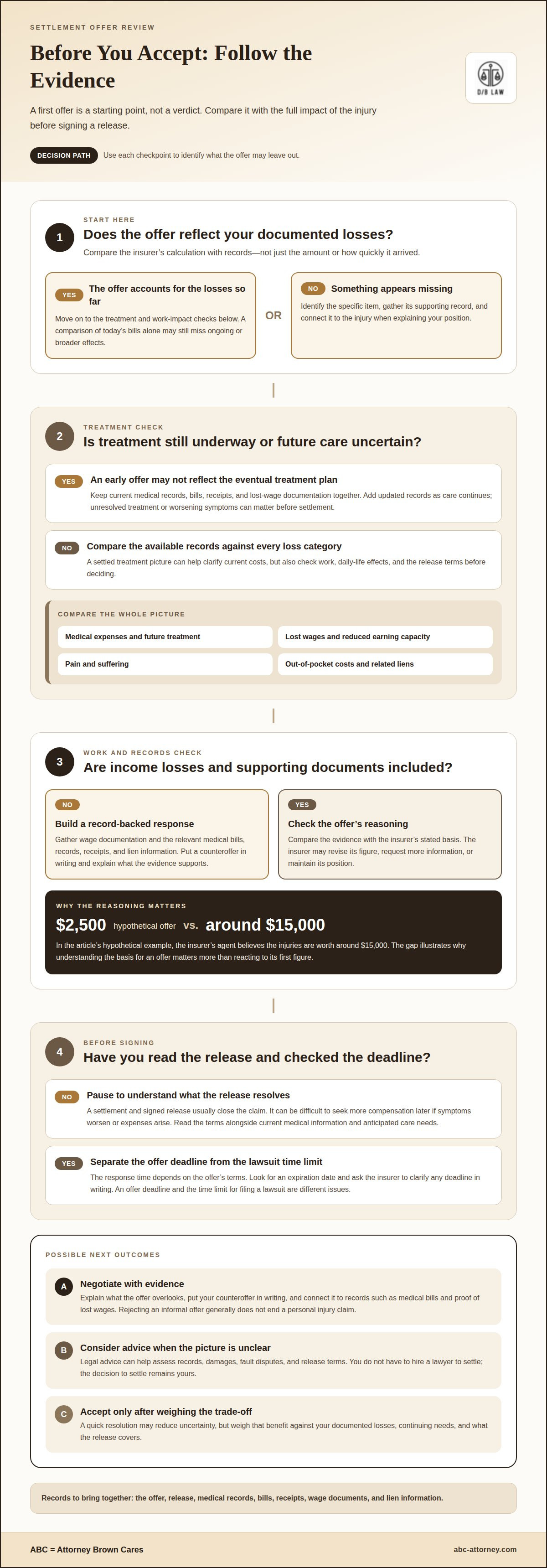
The first offer may be a starting point, not a verdict. If you're wondering whether you should accept the first settlement offer, don't decide based on the amount alone. Compare it with your documented losses, ongoing care, lost wages, and any lasting effect on your ability to earn. Accepting a settlement and signing a release usually closes the claim, making it difficult to seek more if costs or symptoms increase.
A quick offer can feel like relief when bills are arriving and recovery is uncertain. It may be reasonable in a straightforward claim, but an early amount can overlook losses that have not fully emerged. The decision is yours, and you can negotiate instead of accepting immediately.
This article explains how to compare an offer with medical expenses, future treatment, lost income, reduced earning capacity, and other effects of an injury. A useful comparison considers not only today's bills but also what the injury may continue to cost in health, work, and daily life. It also explains how legal advice can help assess records, damages, and release terms so you can decide carefully rather than feel rushed.
Table of Contents
Should I Accept the First Settlement Offer From Insurance?
Don't accept an insurance company's first offer just because it arrived quickly. Compare it with your documented losses, the evidence supporting your claim, and the terms of the release you would sign.
Lawyer Review of Settlement Offers
That comparison matters when injuries are serious, treatment is continuing, or the insurance company disputes fault. A lawyer can gather supporting records, assess damages, explain how the release affects your claim, and communicate with the insurer. In a hypothetical example, an insurer offers $2,500 while its agent believes the injuries are worth around $15,000. The gap shows why understanding the reasoning matters more than reacting to the first figure.
Negotiation and Counteroffers
Negotiation means discussing the offer with the insurance company before finalizing an agreement. You can negotiate after receiving an initial offer, and a counteroffer lets you explain what amount you believe the evidence supports. Put your counteroffer in writing and connect it to records such as medical bills and proof of lost wages.
Specific evidence makes your position clearer. For example, identify a bill the offer overlooks, include the corresponding record, and explain how it relates to your injuries. The insurer may revise its figure, ask for more information, or maintain its position. Rejecting an informal offer generally doesn't end a personal injury claim, so you can continue discussions before deciding whether to settle.
You may be able to resolve a claim without a lawyer. A lawyer can help assess and negotiate it, especially if the insurer disputes fault or the records don't show the injury's full impact. The decision to settle remains yours.
Accepting or Rejecting an Offer
The response time depends on the offer's terms, so look for an expiration date and ask the insurer to clarify any deadline in writing. An insurance company can technically revoke an offer, although that is extremely unlikely. Don't confuse an offer deadline with the time limit for filing a lawsuit. They are different issues.
Before accepting, review the release carefully. Accepting a settlement and signing a release usually closes the claim, making it difficult to seek more compensation later. If you reject the offer, state your position clearly and keep the supporting documents. A quick resolution may reduce uncertainty, but weigh that benefit against your evidence and losses before agreeing.
What Damages Should an Insurance Settlement Cover?
Compare an offer with the injury's documented costs and its effects on your health, work, and daily life. A complete review includes expenses already incurred and needs that may continue.
Before responding, gather medical records, bills, receipts for out-of-pocket costs, wage documentation, and information about any liens. These records help show what the offer covers and what it leaves out.
Medical Costs and Other Damages
Damages may include medical expenses, future treatment, lost wages, reduced earning capacity, pain and suffering, and out-of-pocket costs. Each category captures a different consequence of the injury, so comparing the offer with bills alone can leave important losses unaddressed.
For example, organize provider bills alongside pharmacy receipts and records of missed work. Identify liens tied to medical expenses, then compare each item with the insurer's calculation. This review can show whether the proposed amount reflects both current treatment and the injury's broader impact.
Medical information may remain incomplete while treatment is underway. An injury's seriousness and future care needs can take time to assess, so an early offer may not reflect the eventual treatment plan. Keep current medical records, bills, receipts, and lost-wage documentation together. Add updated records as care continues, so your response rests on a clear record rather than estimates alone.
Settlement Releases and Future Expenses
A settlement release identifies the claims resolved by the agreement and can affect whether you seek more compensation later. Accepting a personal injury settlement and signing a release usually ends the claim, making additional recovery difficult if symptoms worsen or expenses arise.
Can you reopen a claim after signing a settlement release? Usually, reopening is difficult because the release closes the claim. Before signing, read its terms and compare them with your current medical information and anticipated care needs.
Consider someone still attending appointments when an insurer offers a final payment. If further treatment becomes necessary, a signed release may prevent that person from seeking additional compensation through the same claim. That is why unresolved treatment, long-term pain, and possible changes in earning ability matter before an agreement. A lawsuit may be an option in a personal injury matter, but settling first can change what remains available to pursue.
For a focused evidence review, bring together the offer, release, medical records, bills, receipts, wage documents, and lien information. A settlement review discussion can help you understand how those materials relate to the claim before you decide.
Reasons initial insurance settlement offers may be low
An early offer may reflect only the information the insurance company has when it first reviews an accident claim. If the file includes an emergency-room report but no follow-up records, the amount may focus on immediate care. It may not yet account for continuing treatment, missed work, or symptoms still being assessed.
Timing matters. A doctor may still be evaluating symptoms while appointments and tests continue. Until the medical picture develops, the claim file may not show the injury's course or future care needs. An insurer working from that snapshot may value the claim differently after receiving more records and a clearer account of the impact.
Disputed responsibility can also affect an insurance settlement. If the insurer questions how the accident happened, it may assess the claim based on a different view of fault. A police report, photographs, and witness accounts can help clarify what occurred. As these materials enter the file, the insurer's assessment and the amount under discussion may change.
A quick offer alone doesn't prove the insurance company acted improperly, and a first offer isn't automatically unfair. A smaller claim with clear medical records and limited treatment may settle for a reasonable amount. Focus on whether the offer accounts for your documented losses and how the insurer calculated it, rather than judging it only by how quickly it arrived.
State rules and lawsuit filing deadlines depend on where the claim arises, while an offer may have its own response date. These are separate timelines, so don't assume settlement discussions extend a deadline to file suit. For a Texas accident, consider the applicable Texas rules and the specific terms of the offer before deciding how to respond.
Before speaking with the other party's insurer, distinguish its request from one made by your own insurer. You don't have to give the other party's insurance company a recorded statement, but you must cooperate with your own insurer. Ask which company is requesting the statement and what claim it concerns. This helps you respond to the right party without confusing separate insurance matters.
Should you accept the first amount? Compare its stated basis with the evidence and identify what it includes, disputes, or leaves unanswered. An early settlement can close a claim sooner, but speed alone doesn't show whether the amount reflects the injury's full impact. You decide whether to accept, reject, or negotiate an informal offer.
Lost wages and reduced earning capacity
Lost wages and reduced earning capacity describe different work-related losses after an injury. Lost wages are income missed during recovery. Reduced earning capacity is a lasting effect on what you can earn. An early offer that counts missed shifts but overlooks a changed ability to work may undervalue these damages.
Start by documenting income lost because of the accident. Gather pay records, schedules, employer correspondence, and notes showing time away from work. For example, a worker who misses shifts for medical appointments can compare appointment dates with payroll records. Clear documentation connects the absence to treatment and shows how the loss affected household finances.
Then consider whether the injury changed your work, not just your attendance. A warehouse worker who can no longer lift heavy items may need different duties or fewer hours. Someone whose job requires driving may face limits if an injury affects their ability to drive safely. These examples show why damages may involve future earning ability, not only pay already missed.
Evidence of reduced earning capacity can include medical records describing restrictions, employer records showing changed duties, and documentation of interrupted or altered work. Keep records organized by date and note what each one shows. A doctor's restrictions, for example, may help explain why a worker cannot return to the same tasks. The records should connect the injury to the work limitation.
Separate each loss when reviewing the offer. Compare documented past wages with the amount assigned to missed work. Then identify whether the offer considers changes in duties, hours, or ability to remain in the same role. Don't treat medical bills as a substitute for wage evidence. Each item supports a different part of the compensation assessment.
An early offer can arrive before your work situation is clear. You may still be receiving treatment, waiting to return, or learning whether restrictions will continue. An offer based on current missed wages may not capture the full effect. Record changes as they occur, such as returning with reduced hours or taking on different job responsibilities.
Before deciding, make a simple comparison: list missed work and supporting pay records, then list any ongoing work limits and the evidence explaining them. This helps show which losses the offer addresses and where more documentation may be needed. A careful review keeps the focus on the injury's actual effect on your income, not assumptions about when work will return to normal.
Evaluating settlement offers with an attorney
An attorney can evaluate an offer by comparing its terms with the evidence, damages, and disputed issues in your injury claim. This connects the insurer's amount to the facts, rather than treating the first figure as a reliable measure on its own.
For a car accident claim, an attorney can organize medical records, bills, wage documents, and evidence about how the collision occurred. These materials help identify what the insurance company accepts, disputes, or considers unsupported. For example, a treatment record describing ongoing symptoms can be compared with an offer that appears to account only for initial care.
Valuation also involves factors that don't appear on a single bill. Future care needs, comparative fault, and available insurance limits can affect a personal injury claim. An attorney can assess how these factors relate to the evidence and explain their effect on negotiation. If the insurer disputes responsibility, the attorney can review the available records and identify where the parties' accounts differ.
Review the release separately before signing. An attorney can explain which claims the document resolves and whether its language matches the agreement under discussion. For instance, if the release covers all injury-related claims, signing may prevent a later request for additional compensation. Understanding that consequence is part of evaluating the offer, not paperwork to leave until the end.
Legal advice can also make negotiations more focused. An attorney can communicate with the insurance company, submit supporting records, and explain why a counteroffer reflects the documented losses. A clear response might address a disputed medical expense, a work restriction affecting earning ability, or evidence relevant to fault. This gives the insurer specific points to answer instead of a bare request for more.
That doesn't mean every claim requires a lawyer. A straightforward injury claim with clear records and a release you understand may be manageable without legal representation. But if the insurer contests fault, future care remains uncertain, or the release is broad, legal review can clarify the tradeoffs before you agree. The decision to settle remains yours.
Before a consultation, gather the offer, release, medical records, bills, wage documentation, and correspondence with the insurer. An attorney can use those materials to assess the offer, identify gaps, and explain negotiation options. If you want help evaluating a settlement, discuss your offer with an attorney.
The Dedric Brown Law Firm: Traumatic Brain Injuries
The Dedric Brown Law Firm represents people with claims involving traumatic brain injuries and hypoxic or anoxic brain injuries. When an injury affects memory, communication, movement, or independence, settlement decisions may involve complex medical evidence and future needs. Legal support can help assess your records and the insurer's offer before you decide whether to sign.
The firm also handles birth injury and truck wreck claims. In these cases, the impact may extend beyond immediate medical bills, making a careful review of the injury and its documented effects important. The firm's ABC identity reflects “Attorney Brown Cares,” a commitment to personal attention throughout the legal process.
If you’re weighing an offer involving a serious injury, contact The Dedric Brown Law Firm to discuss your claim, or visit abc-attorney.com.
Make Your Next Move With Clarity
A settlement decision can shape which options remain after your claim ends. Before committing, take time to understand the agreement and decide whether it reflects an outcome you can accept. Asking whether you should accept the first settlement offer is a prompt to assess your priorities, not a reason to rush.
Your next step can be a focused review of the offer and its release. Note any terms you don't understand, gather the documents that matter to your claim, and get clear advice about your choices. A careful decision is an active one. You deserve to understand what you're agreeing to before you sign.
If you want to discuss how the settlement terms affect your claim, contact The Dedric Brown Law Firm. Take the time you need to move forward with confidence and make a decision that feels informed and right for you.
Frequently Asked Questions
What Should Be Included in a Fair Texas Injury Settlement?
A fair Texas injury settlement should account for documented losses and the injury's effects on your life. Review medical expenses, future care, lost income, reduced earning ability, out-of-pocket costs, and non-economic harms such as pain or emotional distress. Also consider liens and any dispute about responsibility. Ask for a written breakdown of the proposed amount so you can see what the insurer included and which losses may still need discussion.
Can I ask for more money?
Yes. You can ask the insurer to reconsider its amount and explain why your claim supports a different figure. Focus on a specific gap, such as a documented expense the offer left out or a disputed absence from work. Provide relevant records and keep copies of your request and the insurer's reply. A clear explanation gives the adjuster concrete issues to evaluate instead of an unsupported request for more.
Can an Insurance Company Revoke an Offer?
An insurance company can technically revoke an offer, but doing so is extremely unlikely. Read the offer for its terms and response date, and keep a copy of the document and related messages. If the insurer changes its position, record when and how it communicated that change. Don't treat an informal discussion as a finalized settlement. The written offer and any acceptance terms matter.
Can you negotiate a settlement without an attorney?
Yes. You can negotiate directly with the insurance company without hiring an attorney. For example, you might identify an expense the offer overlooks and provide a record to support it. Keep communications factual and organized, and save copies of each submission and response. Legal advice can help if the insurer disputes responsibility, the release is unclear, or the claim involves complex medical or financial issues.
Should I Sign a Release From the Insurance Company After an Accident?
Sign a release only after you understand which claims it resolves and what rights you give up. Read the entire document, not just the payment terms, and compare its language with the settlement offer. For example, a release may cover claims beyond the specific bill you discussed. If a phrase is unclear, get an explanation before signing. Once signed, a release can make additional recovery difficult.
What Happens If You Accept a Settlement and Your Injuries Get Worse?
If your condition worsens after settlement, the signed release may prevent you from seeking more compensation for the same claim. New symptoms, for example, could require additional appointments or care after the agreement is complete. Keep copies of the settlement documents and medical records. Before accepting, consider whether your treatment picture is stable enough for you to understand the consequences of closing the claim.
Should I accept the first settlement offer after a car accident?
Not automatically. Decide whether you should accept the first settlement offer after a car accident by comparing the amount with the evidence, your losses, and the release terms. A straightforward claim with clear records may support an early resolution, while disputed fault or continuing treatment can complicate the assessment. The first amount is not necessarily the insurer's final position, and the decision to settle belongs to you.
How is a fair personal injury settlement amount calculated?
Assess a fair amount by weighing documented losses alongside the injury's broader effects. Relevant considerations include medical expenses, future care, lost income, reduced earning ability, pain, emotional distress, and evidence about responsibility. Available insurance limits and liens can also affect negotiations. No single amount fits every case. Compare the offer with your records and the particular consequences of your injury.



Comments